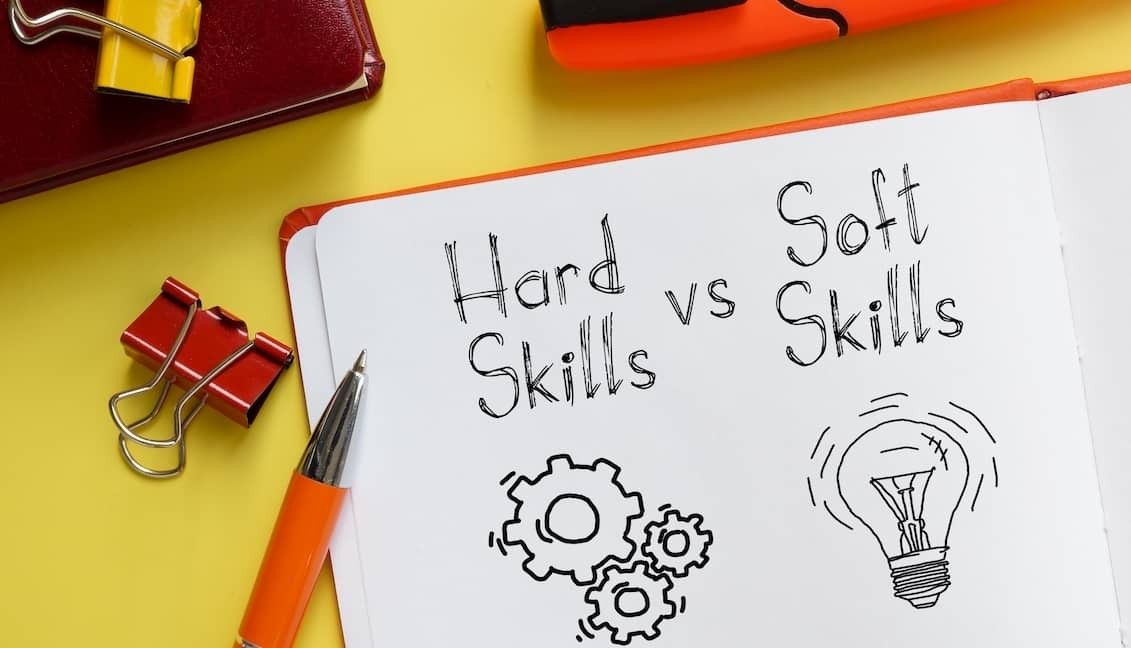
What is the difference between hard and soft skills and does one matter more than the other?
Employers look for both skills as they are essential in a large number of careers. They can also be thought of as skills (hard) and qualities (soft). Almost all jobs will need you to have certain soft skills to be able to perform effectively, cooperate with others and be adaptable in the workplace. It is important that you think about your skills and alter your CV depending on the requirements laid out in the job description.
Research the company to find out what their company culture is like, see what their beliefs are. Look closely at the job description as you should be able to find some of the soft skills they are looking for there. You will need to show the right combination of the two. You’d think that hard skills were the ones that matter the most but the demand for soft skills has been growing since at least 1980. It is also worth including examples of where you have used these skills before and how you can apply them to the workplace. You can mention a variety of skills you have gained while at school, volunteering or during extracurricular activities.
Try to include a combination of both types of skills.
Hard skills are abilities that you have been taught, such as computer skills, whereas soft skills are personal and behavioural traits and can’t be taught. Show how you would be able to add value to a work environment by highlighting your skills. Write a list of at least 5 of your strongest skills in bullet form so that they are easy to read and stand out. Make sure that you mention skills that are in the job description. The skills section of your CV can be separated into hard and soft skills. Try to back up your soft skills by giving an example of where you have used them. Hard skills can get you the interview, but soft skills can get you the job.
Hard skills
These are skills that can be taught, they are the technical knowledge and training that fits the job. They are easily measurable, with evidence being shown with certificates and awards. They can also be proved at an interview using proficiency testing if you don’t have a certificate to prove it. All jobs will require certain hard skills in order to be able to do a specific job.
Some examples of hard skills are:
• Graphic design
• Language
• Maths
• Marketing
• Coding
• Budgeting
• Mixing drinks
• Microsoft Office
• Carpentry
• Plumbing
• Auditing
Soft skills
These are skills that are not tied to one particular job, they are general characteristics that help you to thrive in the workplace, no matter the level of employment, role, or industry. They are also called transferable or interpersonal skills. They are habits and traits you have developed over time through life experience. Employers will be looking for people whose soft skills fit in the culture of their company. Some employers prefer people who have stronger soft skills than those with hard skills. For example, if you were looking for a role in human Resources and can demonstrate that you have soft skills such as communication, open mindedness, and attention to detail an employer might consider those as being more relevant to them and the job than hard skills.
Some examples of soft skills are:
• Communication
• Leadership
• Teamwork
• Problem solving
• Adaptability
• Critical thinking
• Dependability
• Positive attitude
• Creativity
